


Is It a Performance Issue or a Neurodivergent Trait? A Guide for Managers
- Kim To

- 6 days ago
- 5 min read
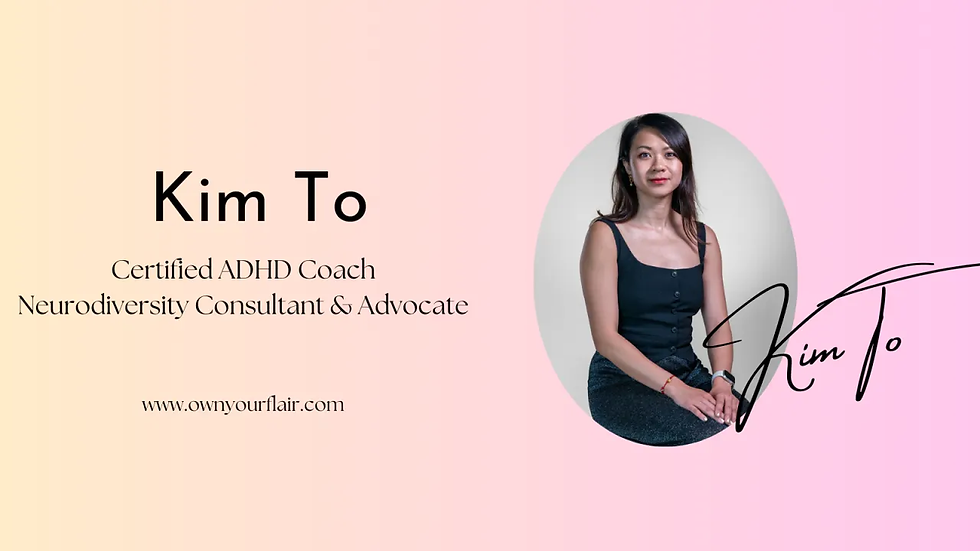
This informal CPD article, ‘Is It a Performance Issue or a Neurodivergent Trait? A Guide for Managers‘, was provided by Kim To, founder of Own Your Flair, a coaching and training company supporting neurodivergent individuals and the organisations that work with them.
Let me paint you a picture that comes up more than I would like.
A manager has a team member who is technically brilliant. They deliver. They are reliable. But they communicate by email rather than picking up the phone, they need tasks written down clearly, and they never seem to volunteer for things unless asked directly. So the manager starts to wonder:
Are they committed?
Do they actually want to progress?
A performance conversation follows, and the feedback is that they need to show more initiative and communicate more proactively.
What the manager does not know is that this employee is autistic. And what looks like disengagement is actually just how their brain works.
This kind of misread is not rare. It is happening every day in organisations across the UK, and it costs everyone involved more than people realise.
The Problem with “Standard” Performance Benchmarks
Most performance frameworks were built around neurotypical ways of working. They reward consistency, verbal confidence, the ability to read a room, and an instinct for picking up on unwritten expectations.
For a lot of neurodivergent employees, those benchmarks are not a fair measure of their capability. They are a measure of how well someone can mask.
Take initiative. It is one of those things that gets flagged constantly in performance reviews. But for many autistic people, initiative as we typically define it, spotting what is needed without being told, self-promoting, volunteering unprompted, does not come naturally. It is not because they do not care or do not have ideas. It is because they think literally, communicate directly, and tend to do exactly what they have been asked to do. That is not a weakness. In many contexts it is a strength. But if a manager is assessing someone against a neurotypical standard and does not understand this, they will consistently underrate someone who is actually doing their job well.
Communication preference is another one. Managers who default to calls and verbal catch-ups sometimes read a preference for written communication as evasiveness or lack of engagement. For many neurodivergent people, written communication is not a style choice. It is a genuine need. It allows time to process, to give a considered response, to avoid the cognitive overload of an unplanned phone call. The manager who treats their own communication style as the benchmark is not being neutral. They are being neurotypical.
What This Does to the Person on the Receiving End
I want to be honest about this part because I think it gets glossed over a lot.
When a neurodivergent person is told they are not performing, and they know they have been working their hardest, the impact goes deep.
I have worked with clients who have been in their jobs for years, good at what they do, who have been put on performance plans they did not understand and could not make sense of. They internalise it.
They start to believe they are not good enough. Many reach burnout not because the role was too demanding, but because the effort of trying to perform in ways that do not fit their brain, while also holding everything together on the outside, eventually becomes too much.
For people with ADHD, critical feedback, even when it is well-intentioned, can land with a force that is completely disproportionate to what was meant. It is not a character flaw, and for many people with ADHD it can feel like a physical response. A manager who does not know this can cause genuine harm without ever meaning to.
Before You Have That Performance Conversation: A Checklist for Managers
If a team member’s behaviour is concerning you, pause before reaching for the performance framework. Ask yourself:
Is this actually a performance issue, or could it be a communication difference?
Have I been explicit and direct about what I need, or am I expecting them to read between the lines?
Have I actually asked this person how they work best?
Is my concern based on evidence of poor outcomes, or on how someone comes across?
Could there be a reasonable adjustment I have not yet explored?
Am I holding this person to a standard that was built for a neurotypical brain?
None of these questions require a diagnosis. They just require a bit of curiosity and a willingness to manage differently.
“I Don’t Have Time for This” Is Not the Answer
I hear this a lot. Managers are stretched. They are juggling delivery, relationships, team dynamics and a list of priorities that never gets shorter. Understanding neurodiversity can feel like one more thing they do not have bandwidth for.
But here is the thing. Managing people has always meant understanding the people you manage. That is the job. And the question is not whether a manager can afford to pay attention to how their team communicates and works best. The question is whether they are willing to use their position to bring out the best in someone, or whether they are going to inadvertently use it to hold them back.
We are also moving into a world where AI is increasingly handling execution. As that shift accelerates, what managers will be judged on is their emotional intelligence, their ability to build real relationships, and their capacity to get the best out of the people around them.
Neurodiversity awareness is not a soft skill on the side. It is becoming a core part of what good leadership actually looks like.
The CIPD estimates that neurodivergent employees make up between 15 and 20% of the workforce. Only 39% of organisations have delivered any neurodiversity training at all. That is a gap worth thinking about.
A Final Thought
The next time something in a team member’s behaviour concerns you, try asking a different question first. Not “what is wrong with this person?” but “what do I not yet understand about how this person works?”
That shift from judgement to curiosity is, in my experience, where genuinely good management begins.
We hope this article was helpful. For more information from Own Your Flair, please visit their CPD Member Directory page. Alternatively, you can go to the CPD Industry Hubs for more articles, courses and events relevant to your Continuing Professional Development requirements.
References
CIPD (2024). Neurodiversity at Work. https://www.cipd.org/uk/knowledge/guides/neurodiversity-work/
VinciWorks (2025). Neurodiversity in the Workplace: 35% of managers lack confidence on reasonable adjustments as tribunal claims surge. https://vinciworks.com/blog/neurodiversity-workplace-adjustments-survey/
ACAS (2023). Neurodiversity in the Workplace Guidance. https://www.acas.org.uk/reasonable-adjustments/adjustments-for-neurodiversity
Equality Act 2010, Section 20. Duty to make reasonable adjustments. https://www.legislation.gov.uk/ukpga/2010/15/section/20

Comments